
Here When You Need Us Most
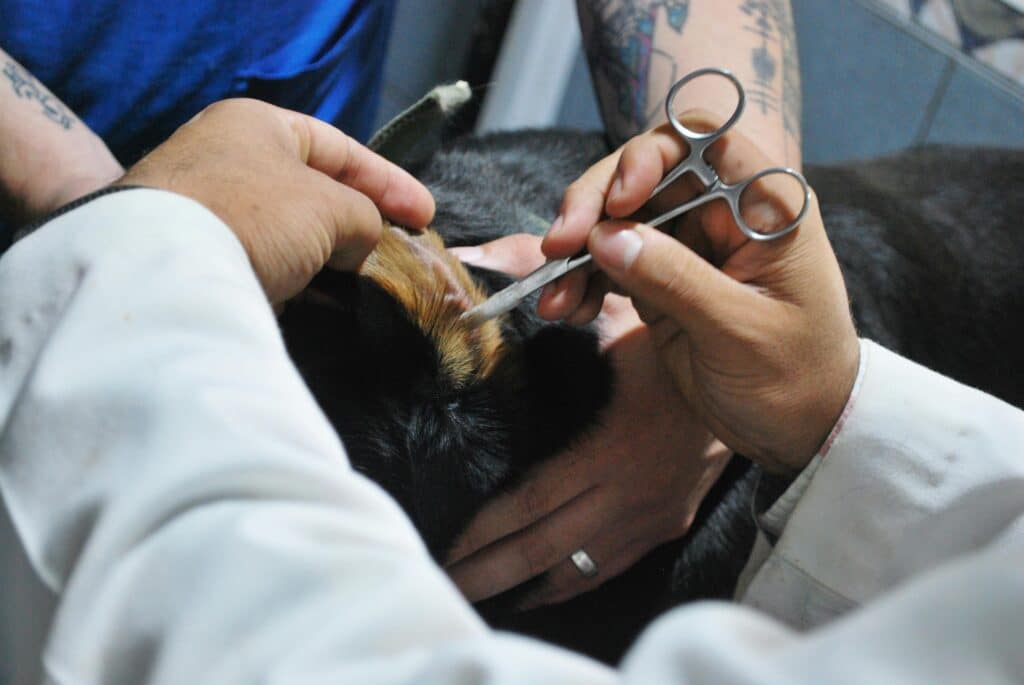
Our veterinarians’ high level of expertise and our practice’s fully equipped surgical suite allows us to perform the vast majority of soft tissue surgical procedures that your pet may require. Soft tissue surgery encompasses any surgery that is not related to bones. It includes procedures such as desexing, exploratory laporotomies, caesareans, lump removals, biopsies, wound stitch-ups, removal of intestinal foreign bodies – the list is endless!
A very common soft tissue surgery is the removal of lumps. Some lumps may require a biopsy prior to removal to help understand whether they are cancerous or not. This information assists us in planning the surgery accordingly to give your pet the best possible outcome. Once they have been removed we recommend sending them to our external laboratory for analysis.
Although most lumps are benign (not harmful), a minority are more serious (malignant). In the case of malignant (cancerous) tumours, early removal and an accurate diagnosis is extremely important to maximise the chances of a good outcome.
If you find a lump or bump on your pet please make an appointment to visit one of our veterinarians to discuss any surgery your pet may require.
Here When You Need Us Most
Using a firm brush to remove dead hairs, tangles and pieces of garden matter should form part of your daily routine. Grass seeds can commonly become stuck in their eyes, ears and nose, causing irritation or even infection. Check your rabbit’s rear end daily to make sure it is clean and dry, if soiled it is very prone to fly strike.
Feeding and nutrition is the most important factor in making sure your rabbit stays healthy. Many commercial rabbit foods don’t contain enough fibre (18 – 20% is required) and are too high in fats and sugars. Rabbits are herbivores so their diet should consist almost entirely of vegetable matter. Pellets and mixes should not form a main part of the diet. Grass or hay is an essential dietary component to ensure your rabbit’s health. Apart from providing a high fibre diet, chewing hay wears down their continuously-growing teeth and keeps them occupied, preventing boredom. Ideally, feed your bunny 85% hay and 15% veggies such as Asian greens or endive (lettuce and cabbage can cause diarrhoea). Treats such as fruits, root veggies (carrots), capsicum and pellets should only be offered in small amounts (1 – 2 tablespoons per day per rabbit). Fresh water should always be available using both a drip feed bottle and an open container.
Routine veterinary care for rabbits includes vaccination against calicivirus and desexing (females can become quite aggressive when mature and are very prone to reproductive cancers). Like all animals, rabbits should have regular veterinary checks, especially to check their teeth and claws.
We welcome you to book an appointment with us to discuss how to keep your rabbit in optimal health.
